Valle del Cauca, Colombia

The Valle Kraft standard

Paper reaches you from our mill near Cali or from a qualified partner mill in the valley. Either way it was made against the same written specification, tested against it, and Valle Kraft answers for it.

The premise

We know what good paper looks like because we make it.

Plenty of companies sell paper they did not manufacture. Merchants have done it for a century. Few of them can walk onto a machine floor, watch a sheet run, and tell you within an hour whether the mill can hold your specification or is about to waste your time.

That is the whole reason Valle Kraft exists in this form. We operate our own paper machine near Cali. We have run fiber through it in every condition the valley throws at it, and we have made every mistake the grade makes you make. When we assess a neighbor's machine, we are recognizing things we have already lived through.

Our own output is a shrinking share of what we sell, and that is by design. Tonnage is what the partner mills are for. We operate a machine because it is how we know what to demand from everyone else's, and that demand, written down and enforced, is what you are actually buying.

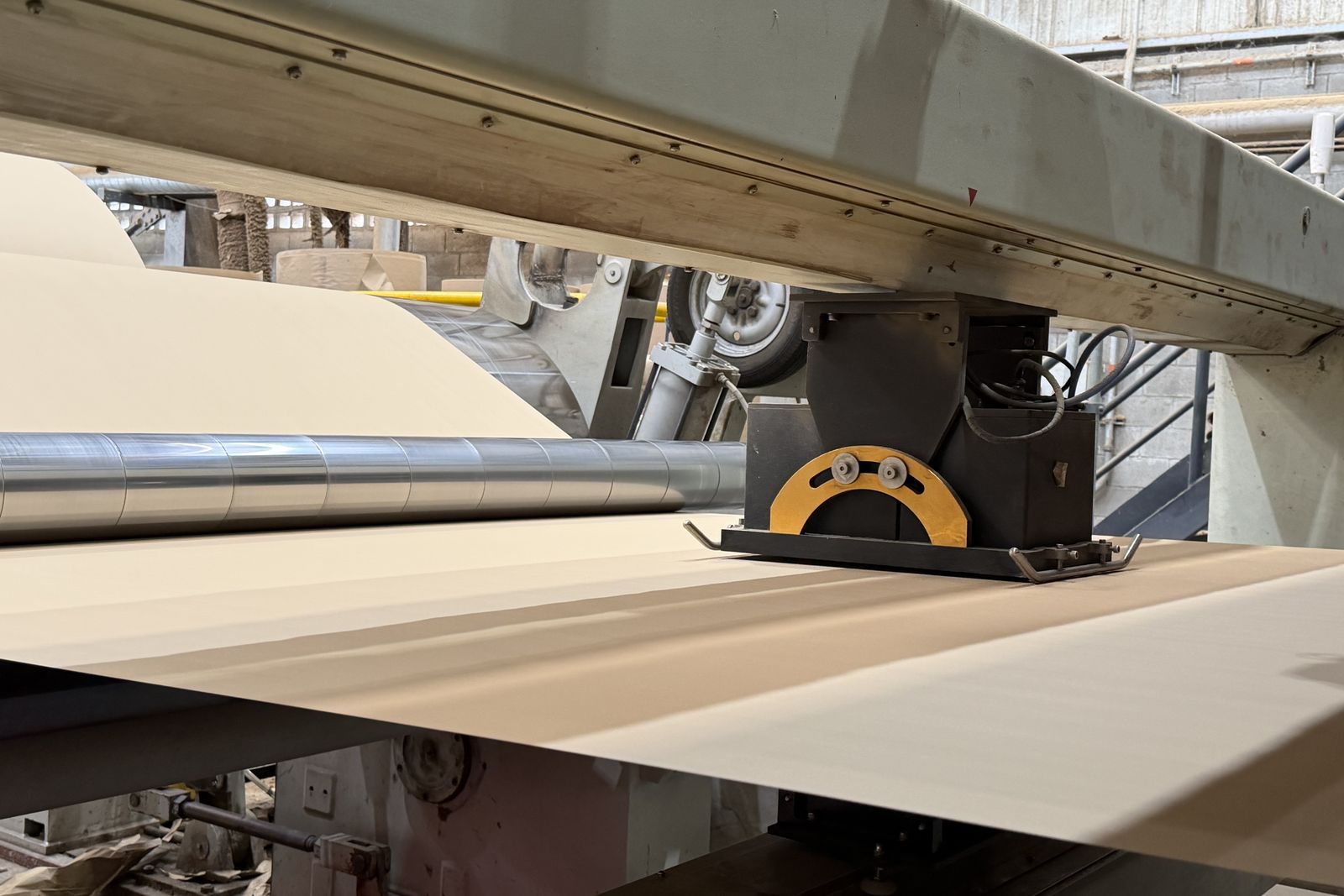
Scanning frame measuring the paper web across the machine at the Valle Kraft mill near Cali
The scanning frame on our machine near Cali, measuring the web across its width

The document

Every grade we sell has a specification with a number on it.

A Grade Qualification Specification is a written document we issue to a mill. It carries a code, such as VK-HOM-TL-01 for testliner, and it states the values that mill has to meet for us to sell its paper as ours.

It is not a description of what the mill currently makes. It is the condition of entry, written before the mill is assessed, and it is the same document for every mill that wants to supply that grade. That is what lets one grade name mean one thing across the whole group, including our own machine.

The requirements govern a handful of properties per grade, not everything measurable. A specification that demanded the best figure on every property at once would be a specification nobody could hold, and a bar nobody clears is not a standard, it is a marketing document.

Most mills publish typical values, because a single mill can simply describe its own machine. A typical value is an average, and an average is something a given reel is free to miss. We publish the floor instead. It is a worse number and a better promise, and it is the only kind of number that can mean the same thing across machines we do not own.

Where the numbers come from. Paper in these grades ends up in an enormous range of converting operations, and each one finds its own way to fail. A sack that splits on a filling line. A liner that crushes three pallets down in a warehouse. A wrap that picks up moisture and blocks on the reel. We set each requirement at the level that makes the grade work across that whole range of uses, rather than at the level a particular machine happens to reach.

That is why a bar does not move when a mill cannot meet it. The number came from what the paper has to survive, not from what a machine would prefer to produce. We will tell a mill exactly what the requirement is. We will not tell it how close it came, because a bar you can creep up on is a bar that gets aimed at rather than met.

The published minimums for each grade are on the register. The full document, including the properties we track without enforcing, goes to a mill under qualification and to a buyer who asks for it.

See the grade register

  • One document per grade. Issued under a code that is quoted in all correspondence and stays fixed across revisions.
  • Reviewed, and revised as a whole. A new issue supersedes the previous one in full, so there is never a question about which version is current.
  • Never lowered for one supplier. If a mill cannot reach the bar, the answer is that we do not sell that grade from that mill.
  • Conditions fixed, not just values. Testing is under ISO 187 conditions, with all tensile work to ISO 1924-3 at 100 mm/min. Results from a different method are not comparable and are not accepted.
  • It binds us too. Our own machine near Cali is qualified against the same document as everyone else's.

Qualification

How a mill enters the program.

A mill ships under our name once it has been through this, and only for as long as it keeps passing.

01

Machine assessment

We visit. We look at the stock preparation line, the wet end, the dryer configuration and the winder, and we form a view on what the machine can hold on an ordinary day. We also look at whether the mill will still be running in two years: the balance sheet, the energy contract exposure and how concentrated the customer book is. A qualified machine that closes is not a supply chain.

02

Independent laboratory testing

Samples go to an accredited independent laboratory. Not to the mill's quality room and not to ours, because a result either party produced is a result the buyer has to take on trust. We choose the sampling, we pay the freight and we pay for the testing.

03

Measured against the bar

The results go against the qualification specification for that grade, property by property. The document already exists and does not move to accommodate the machine in front of us. A mill either clears it or it does not.

04

Trial run, then ongoing testing

A monitored production run before anything is offered for sale, then lot by lot testing for as long as the mill remains in the program. Qualification is a status the mill has to keep.

Sampling

How the samples are taken decides what they can tell you.

The question a qualification has to answer is not whether the paper met the specification once. It is whether the machine makes the same paper on a different day.

On any machine running recovered fiber, the variation between reels made on different days is far larger than the variation across a single reel. That one fact decides how a qualification should be sampled, and most sampling gets it backwards. A plan that maximises the number of specimens taken from one reel measures the wrong thing very precisely.

So twenty samples cut from a single reel answer a question nobody asked. They tell you how that one reel came out. The request is small and specific instead: one sample from each of eight to ten different reels, from as many different production dates as possible, spread across recent months, and where the mill can identify them, from different recovered fiber purchase lots.

They come from finished rolls in the warehouse. Nothing is taken off the machine and no production is interrupted for this, which matters when you are asking a favour of a mill that has not yet sold you anything.

Detailed cutting, labeling and packing instructions go out with the request. Where it is easier on the mill, we arrange for a third party inspection company to attend and take the samples itself. That is ordinary practice for this kind of qualification and it takes the work off the mill's people entirely.

  • Different days, not different metres. Spread across dates is what makes the result mean anything.
  • Fiber lots matter most. On recovered furnish the incoming material is the dominant source of variation, and it moves with whatever the mill bought that week.
  • Nothing folded. A crease ruins a tensile and a tear specimen, so samples travel rolled or flat and wrapped against moisture.
  • Labeled by hand is fine. Production date, machine, shift, grade, target basis weight and a roll number where one exists.
  • We pay. Freight and the full testing cost, at our expense, before the mill has earned anything.

Declarations

What a mill puts in writing.

A signed letter on mill letterhead, before anything is offered for sale. Paper is only half of what a buyer is approving.

  • Fiber composition and source.
  • Sizing chemistry, and any coating or wet strength resin used.
  • No fluorinated compounds. Written confirmation that no PFAS is added at any point in the process.
  • Current mill certifications, where any are held.
  • Available monthly tonnage for the grade, and typical lead time.

The PFAS line stops a United States approval faster than anything else on that list, so it is settled at the beginning rather than discovered halfway through a customer's own audit. It is a question about the whole process rather than about a deliberate addition, which is why it is asked in writing and not taken as a verbal answer.

Recovered fiber in Colombia reaches a mill gate through an informal collection tier. The mill buys from bodegas and the bodegas buy from collectors. We require the mill to document its recovered paper suppliers down to that tier and to sign a supplier code that covers it, because a buyer running a social audit will look past the mill, and anything found upstream attaches to us rather than to the yard it came from.

Where a mill's collection runs through formalized cooperatives, we record that and say so. It is a better answer to an auditor than an undocumented one, and in this valley it is increasingly the true one.

Verification

What a mill has to keep proving.

Clearing the bar once is the start of the relationship. The specification sets out what happens for the rest of it, and it is deliberately one sided.

  • Three production runs, and we define what one is. Separate calendar days, at least seven days apart, and different recovered fiber purchase lots wherever the mill can identify them.
  • A certificate with every delivery. Mill test data accompanies the paper, every time, not on request.
  • Written notice before a change. Furnish source, sizing or coating chemistry, and major equipment. A silent change is a breach in its own right, whether or not the paper drifts.
  • A retained sample from every delivery, held for two years. It is the only way to settle a complaint that arrives late, or to establish when a drift actually began.
  • Our test governs. We test independently whenever we choose to, and where the two disagree the independent result is the one that counts.
  • Non conforming deliveries are rejected. Not discounted, not accepted with a note on file.

Why the run definition is written down. A mill with thin records will happily offer three runs that were Tuesday morning, Tuesday afternoon and Wednesday. That satisfies the words and captures none of the variation the requirement exists to catch. The fiber lot condition is the one that matters most on recovered furnish, because the incoming material is the dominant source of variation and it moves with whatever the mill bought that week.

Ten determinations per reel, taken across the full deckle, is the minimum for a figure to count. A single measurement from the middle of a web says very little about the edges, and the edges are where a converter finds the problem.

Test methods are named against each requirement on the grade register. Where a mill's own laboratory uses a different method for the same property, the specification method governs.

Testing scales with performance, not with volume.

A full physical battery on every delivery is a number that stops working the moment volume arrives. So the scope of testing moves with the mill's own record, following the switching structure used in attribute sampling under ISO 2859-1. A mill that runs clean earns lighter inspection. A mill that misses earns heavier inspection long before it earns a suspension.

Inspection level
Level Entered by Testing per delivery
Qualification Entry to the program Full battery, independent laboratory, across three production runs
Normal Default once qualified Reduced battery every delivery, full battery quarterly
Reduced Ten consecutive clean deliveries Reduced battery on alternate deliveries, full battery quarterly
Tightened One failed delivery Full battery every delivery, at the mill's cost
Suspended Repeat failure under tightened Nothing ships. Requalification starts from the beginning

The reduced battery is basis weight, caliper, moisture and tensile in both directions, plus water absorption where the grade governs it. The full battery is every property on the qualification specification. This structure exists for a second reason as well: a flat regime costs a mill the same whether it runs well or badly, which gives consistency no value. This way consistency pays for itself.

None of this is unusual for a large mill selling into Europe. It is very unusual for a mill of the size we work with in this valley, most of which had never written a specification or had their paper tested outside their own quality room before we arrived. Closing that gap is the service, and it is the reason a buyer can treat paper from a machine they have never heard of as a known quantity.

Labour and safety

The social audit, before your auditor asks for it.

European and North American buyers audit their suppliers, and the audit increasingly looks past the first tier. A mill joining the program is taken through that work as part of qualification, because anything found upstream attaches to the seller of record, and that is us.

What the law already requires

Colombia has required a formal occupational health and safety management system, the SG-SST, since Decreto 1072 de 2015, with minimum standards set by Resolución 0312 de 2019 and scaled to headcount and risk class. A paper mill sits at the demanding end of that scale.

That is the useful part. Doing SG-SST properly already covers most of the health and safety pillar of a four pillar social audit. So this is not an export formality bolted onto a mill that has no use for it. It is an obligation the mill already carries under Colombian law, done properly, and then evidenced in a form your auditor recognizes.

The scope is what an audit looks at: the joint health and safety committee and the workplace coexistence committee, documented working hours, a written grievance mechanism, age verification in hiring records, machine guarding, lockout and tagout, a confined space procedure for the pulper and the chests, noise exposure monitoring, fire equipment, and an evacuation plan.

How a mill gets there

  • Site visit and document review. What exists on paper, and separately, what exists on the floor.
  • An ARL gap assessment. A mill's occupational risk insurer is obliged to provide technical support on its safety system at no charge. Most small mills have never asked. It costs nothing and it produces a written baseline.
  • Implementation with a local SG-SST consultant, against that baseline.
  • Hours and payroll records, handled separately and early, because it is the pillar with the least tolerance for a partial answer.
  • Upstream supplier documentation, started in parallel with all of the above, because it takes the longest to build.
  • Sedex registration, then a four pillar SMETA audit through an international body with Colombian operations.

The firm that implements and the body that audits are never the same. An auditor cannot verify its own remediation work, and a buyer who knows this field will ask.

A functioning SG-SST is a condition of entry rather than an aspiration. The Sedex and SMETA layer on top of it is the evidencing step, and mills are at different points along it. Ask about the machine that would run your order and we will tell you exactly where it stands, with dates.

The part most suppliers avoid

What happens when a lot misses.

Paper machines have bad days. Any supplier who implies otherwise is either new or not being straight with you. The question worth asking a supplier is what they do on the morning production falls outside specification.

Our answer is the reason the whole model works. A lot either meets the specification you bought or it does not ship against it. Off specification production is sold as the grade it genuinely fits, at that grade's price. It does not get quietly loaded into your container with a certificate describing a different sheet.

That discipline is hard to hold when the mill that missed is a neighbor you have known for twenty years. We hold it anyway, because the day we stop, the specification stops meaning anything and there is no business left to protect.

  • Tested before it is offered. The certificate is issued against the lot itself, after production.
  • Retained samples on every lot. Held so a claim is settled against what actually left.
  • Container photographed before the doors close. The set travels with the shipping documents.
  • Roll level traceability. Lot, grade, basis weight, width, diameter and weight on every roll, traceable back to the run.
  • One party to the claim. You notify Valle Kraft. We deal with the mill. The problem stays with us.

Our own machine

What the mill near Cali is actually for.

Start with what it is not. It is not where the tonnage comes from, and we would rather tell you that than have you work it out. A small Yankee spreads its fixed costs across low output, so on cost per tonne it loses to any partner mill running a wider, faster machine. For volume, on an ordinary grade, one of them will beat us on price. Tonnage is their job.

What a small machine is good at is the work a large one cannot afford to stop for. A Yankee dryer is one large steam heated cylinder. It presses one side of the sheet to a hard glaze and leaves the wire side matte, and it gives a far wider basis weight window than a comparable multi cylinder machine, so a grade change costs it proportionally little. That is a poor way to make ten thousand tonnes and an excellent way to make five.

A customer who wants to see paper being made is welcome to come and stand next to it.

Machine specification
ConfigurationSingle Yankee, machine glazed
Maximum reel trim2,600 mm
Basis weight range18 to 140 g/m²
Standard furnishRecovered fiber
Reinforced furnishVirgin market pulp blends to order
OperationContinuous, year round
OutputJumbo reels and slit rolls, sheets to order

These figures describe the machine, not the register. What this machine can physically run is wider than the list of grades we hold a qualification specification for. Group capacity and the full weight range across qualified partner mills are confirmed at the time of offer.

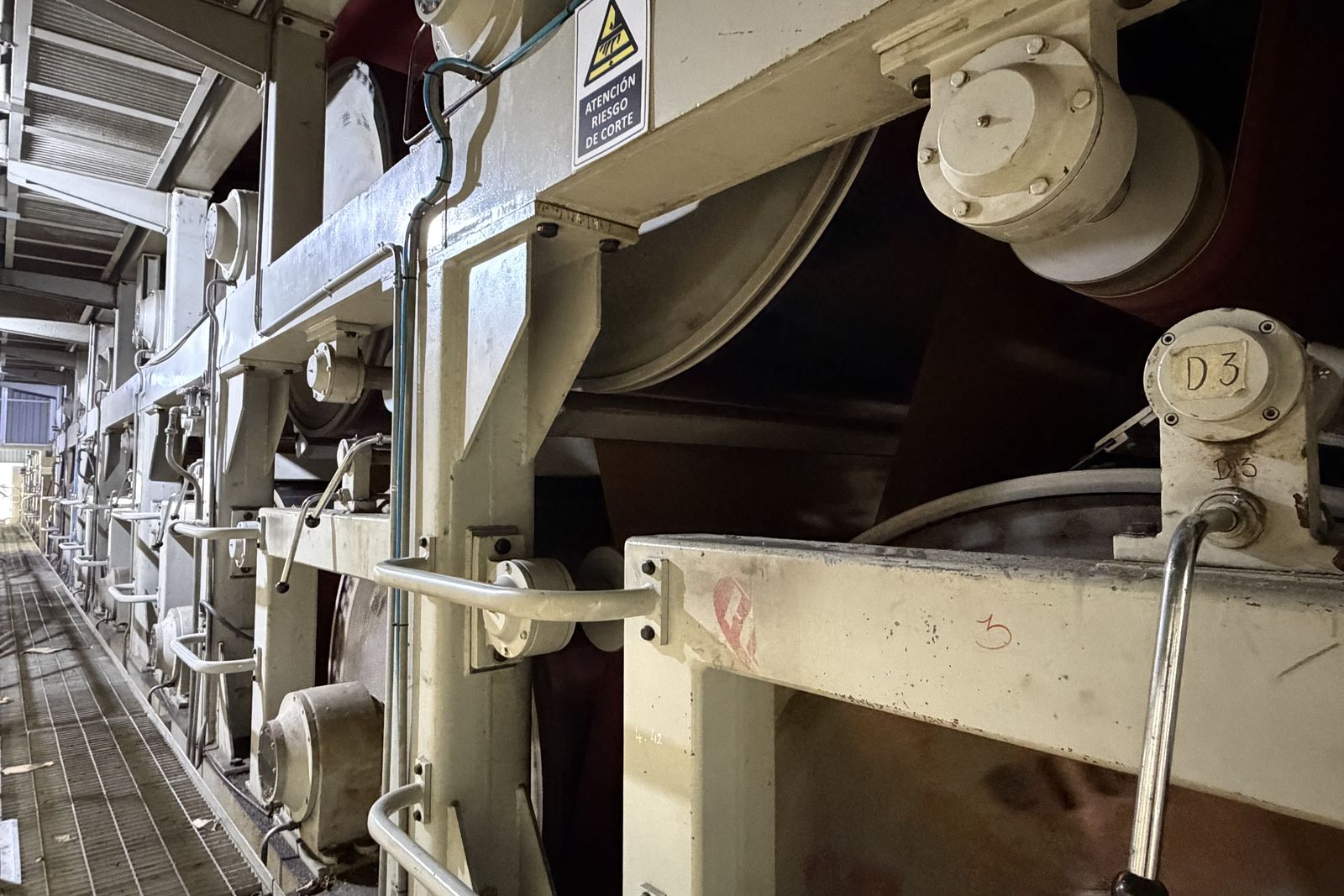
Machine section of the Yankee paper machine running at the Valle Kraft mill near Cali
The machine running near Cali
DEVELOP

Development and qualification

Trialling a new furnish on a three hundred tonne a day machine means making and then disposing of real tonnage before you have learned anything. Here we run five tonnes, iterate inside a week and fail cheaply. A recipe proved on our machine transfers to partner capacity once it works, and that capability is not something a competitor acquires by signing more mills.

SPECIALTY

Specialty and short runs

A grade change costs a small machine proportionally little, which is the one place its cost structure stops being a handicap. Custom widths, unusual basis weights, sample production, and the two tonnes of something specific that a converter genuinely needs and no large machine will stop the run to make.

BACKSTOP

Swing capacity

When a partner mill takes a break, has an outage, or gets allocated away by a larger local buyer, there is somewhere to put an urgent order. It does not cover full volume and we will not pretend otherwise. It covers the emergency, which is what a continuity question is really asking about.

CALIBRATE

Cost calibration

We know what a tonne actually costs to make: energy, chemical consumption, refining load, yield. So when a partner mill quotes us, we can tell whether the number is padded. A company that has never run a machine cannot do that, and unlike a price list, the knowledge does not go stale.

The obvious objection

We grade our own paper first.

There is a problem with everything above, and it is better raised here than discovered later. We publish that our own test governs when it disagrees with a mill's. We also own a machine that competes with theirs.

Every partner mill has a legitimate reason to wonder whether the testing quietly runs in our favour. The first time we reject one of their loads, that suspicion is the story that gets told about us, and it would be a reasonable story to tell.

So the regime runs on our own machine first, and it runs in the open. The same accredited independent laboratory that tests a candidate mill tests ours. The same sampling, taken across production dates by someone who does not work for us. The same certificate on every delivery, against the same published bars. Mills in the program can see how our own machine scored.

A supplier who can see that we hold our own asset to the identical number has nothing left to argue about. There is also a structural half to this: the more the Yankee runs grades the partner mills do not, the less overlap there is to be suspicious of in the first place.

We do not obscure the mix. Some of what we sell comes off our machine. Most of it does not. All of it ships under the same specification and the same certificate. A buyer who assumes we made everything and then works out the sourcing structure will not forgive it, and it is trivially easy to work out.

  • Same laboratory. Not our quality room, and not theirs.
  • Same sampling protocol. Across production dates and fiber lots, on exactly the terms we impose on everyone else.
  • Same certificate. Every delivery off our own machine carries what every delivery from a partner mill carries.
  • Results visible to the program. A mill under qualification can see how our machine performed against the bar it is being held to.
  • No exemption when we miss. Our machine goes to tightened inspection on the same trigger as anyone else, and it can lose a grade the same way.

None of this is generosity. A specification enforced by a party that exempts itself is not a specification, and a partner mill would be right to treat it as a negotiating position rather than a standard.

The valley

Why the Valle del Cauca is a good place to make paper.

The same three conditions that made our mill viable are the reason there are other mills within an hour of us worth qualifying. This is a paper region, and that is what makes a register of machines possible rather than a single supplier.

FIBER

Recovered paper at the gate

Cali and its industrial corridor, Palmira and Jamundí, generate a steady stream of recovered corrugated and mixed paper. The raw material does not cross an ocean to reach us, which is both a cost advantage and the whole environmental argument.

PORT

A Pacific terminal, same day

Buenaventura is roughly 125 km west. Rolls loaded in the morning reach the port the same day. Very few paper mills in the Americas sit that close to a deep water container terminal on the Pacific side.

POWER

Stable, hydro weighted grid

Colombia's generation mix is heavily hydroelectric, and the Valle del Cauca is an established industrial region with the grid capacity to match. No seasonal shutdown, no monsoon interruption.

Assessment

What we look at on a machine floor.

Test results tell you what a machine did last week. Stock preparation and wet end chemistry tell you what it will do next month. These three are the first things we look at on a mill we are assessing, because they predict almost everything the laboratory later confirms.

STICKIES

Stickies control

Adhesives, hot melts and pressure sensitive residues are the single biggest cause of holes, sheet breaks and converting rejects in paper made from recovered fiber. A stock preparation line has to target both macro and micro stickies through screening, cleaning and detackification chemistry, so the contamination comes out at the mill instead of arriving on your line.

DEINKING

Deinking capability

A deinking stage lets a mill take a wider and cheaper range of recovered grades and still hit a clean, consistent shade. It also opens the lighter and brighter end of the portfolio, bleached MG wrapping in particular, instead of restricting a machine to dark brown furnish.

CHEMISTRY

Close wet end control

Continuous monitoring and dosing of retention, sizing, strength and charge chemistry keeps the sheet inside specification as the furnish shifts underneath it. Converters get even formation, a stable grammage profile and predictable behavior on the unwind.

Specific equipment configuration and chemistry suppliers are discussed under NDA with contract customers and during mill visits.

How we sell

We would rather lose the order than lose the account.

There is a habit in this trade of quoting whatever the buyer asks for and sorting out the difference at the claim stage. If your specification sits outside what our mills can deliver, we say so before you order.

Recovered fiber makes excellent paper for bags, wrapping, liner and medium. On its own it is the wrong material for the most demanding converting applications, because the long fiber is not there to be recovered. When a specification genuinely needs more, we say so and then solve it: virgin market pulp bought in and blended into the furnish to reach the target, priced openly for that grade, with the actual composition declared on the shipment.

Having several qualified machines makes that easier. The honest answer is more often "yes, from this mill rather than that one" than a flat no.

See the grade register
  • Export focus. No domestic order book competing for your allocation when the local market gets hot.
  • Machines we know. We can tell you how a grade will run, because we have tested the machine that runs it.
  • Trial before volume. Nobody should commit an annual contract to paper they have not run on their own equipment.
  • Retained samples. Every lot is sampled and held, so a quality conversation rests on evidence.
  • English and Spanish. Commercial and technical discussion in either, with no translation layer between you and the mill floor.
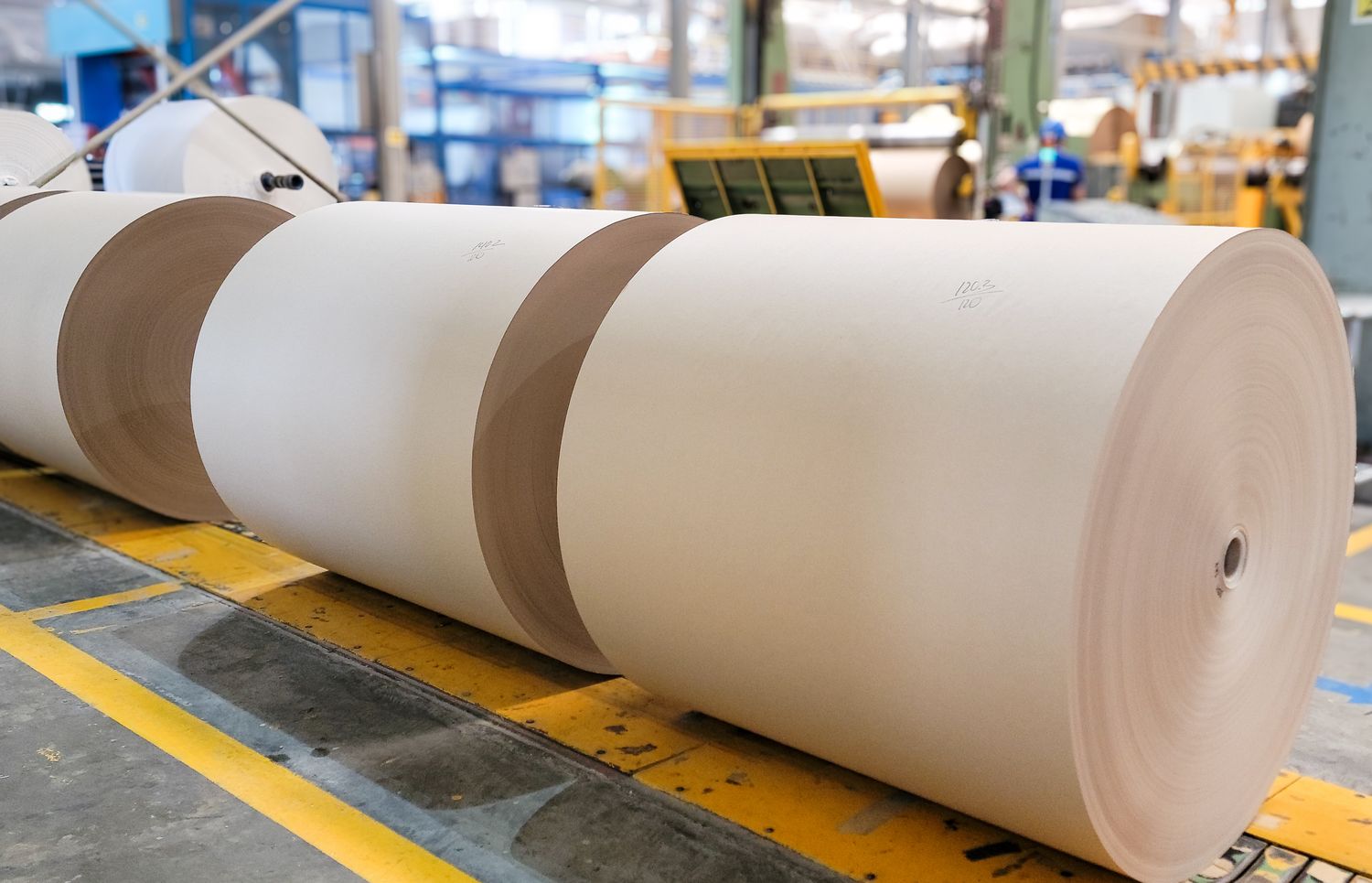
Stacked reels of kraft paper
Several qualified machines, each good at something different. The useful answer is usually which one, not whether.

Fiber

Recovered fiber first, virgin pulp only where it earns its place.

Valle Kraft Paper has no pulp mill and no forestry operation. The backbone of what we sell is recovered fiber: paper somebody in Colombia already used and threw away, collected and repulped here, leaving the country as finished paper instead of as waste.

Where a specification demands strength that recovered furnish cannot reach, virgin market pulp is blended in to the level the grade actually requires, rather than running a virgin weighted furnish across the board because it is simpler. The composition of every grade we ship is stated on the shipment documents.

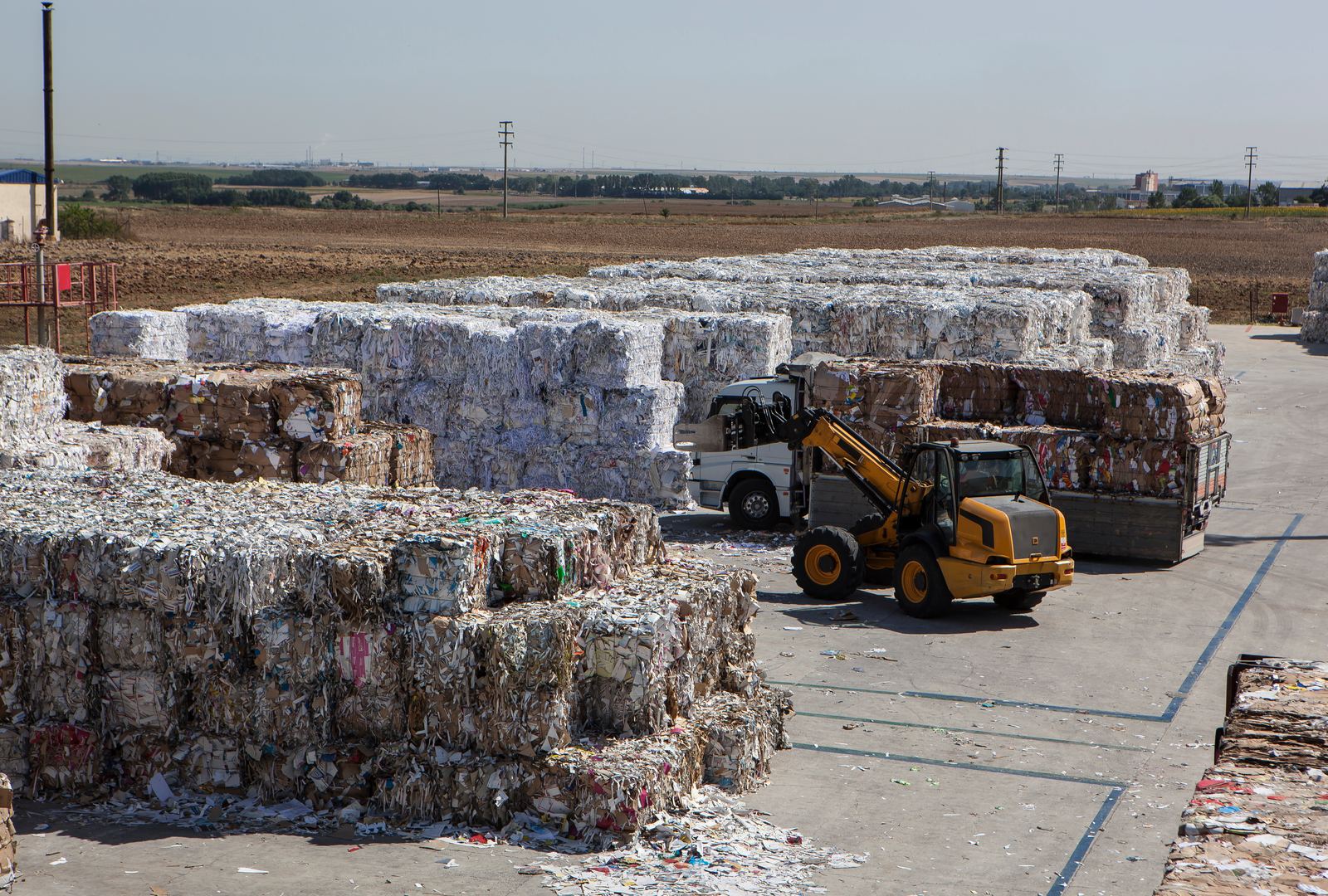
Recovery yard stacked with bales of recovered cardboard and mixed papers, a loader working between the rows
Recovered fiber, collected and consumed inside Colombia

Circularity

Track and trace, closing the loop in Colombia.

For converting operations here in Colombia we run a tracked closed loop program. Your production trim, edge waste and off specification stock comes back to the mill, enters the furnish, and the movement is documented end to end: collection date, tonnage, source plant and the production run it was consumed in.

You end up with a fiber loop you can evidence. For a converter reporting against corporate waste diversion or circular economy targets, that documentation is the whole value: an auditable chain from your factory floor back into a paper machine down the road.

  • Scheduled collection from your plant, on agreed volumes and frequency.
  • Weighed and logged at the mill gate, with tonnage receipted per collection.
  • Traceable to the run. We can show which production lot your fiber entered.
  • Periodic reporting of diverted tonnage for your sustainability and waste reporting.
  • Local by definition. Short haul, low freight emissions, no fiber leaving the country as waste.

Come and see a machine run.

Mill visits welcome. Cali (CLO) is a thirty minute drive from our gate.

Get in touch